



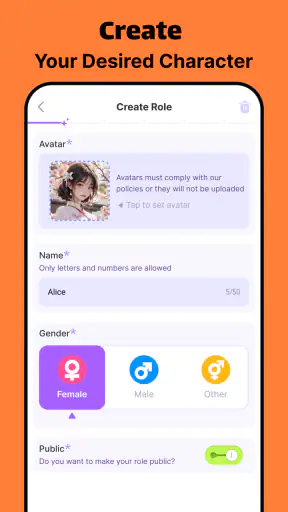
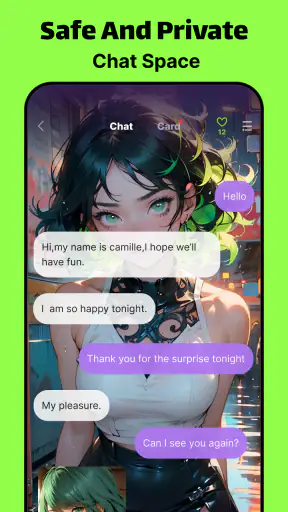


I opened Magic: Fantasy Roleplay Chat expecting a light entertainment app, but its appeal is more specific than that. It is built around fantasy conversations, so the main activity is not watching a finished show or playing through a conventional level-based game. Instead, I enter a situation, begin a chat, and see where the roleplay leads. That makes it feel closer to an interactive storytelling companion than to a standard mobile game.
The app is free to install, which makes trying it fairly easy, although optional purchases range from $1.99 to $49.99 per item. It is published by Digital Fun LLC and sits in the entertainment category. I would treat the mature 17+ rating seriously, especially before handing it to a younger user or using it around children. The fantasy framing may sound harmless, but roleplay conversations can move into themes that are not suitable for every audience.
My overall impression is that this is best for people who enjoy improvisation, character-driven fantasy and the feeling of shaping a conversation rather than simply consuming content. It is less suitable if you want a tightly written story with a guaranteed ending, a traditional combat system or a social app centered on real friends. The difference matters: the pleasure comes from participation, and that also creates the app’s biggest weakness.
From a vague idea to a playable fantasy conversation
Starting with the right expectation
The first useful adjustment is to stop treating the app like a normal chat messenger. I would not open it with the expectation of finding a practical tool, a news feed or a multiplayer lobby. Its purpose is entertainment through fantasy roleplay. That means the quality of a session depends partly on what I bring to it: a character idea, a mood, a setting or even a simple problem that needs solving.
A vague opening can still be entertaining, but a little preparation usually gives the conversation more direction. Before starting, I find it helpful to decide three things: who I am playing, what I want, and what complication should make the exchange interesting. For example, “a cautious healer searching for a missing map” gives the conversation more shape than “let’s talk about magic.” This is one of the app’s less obvious strengths: it rewards a small amount of creative input.
That workflow makes it approachable for short breaks. I can begin with one clear premise instead of learning a complicated ruleset. Someone waiting for a friend, relaxing before bed or looking for a writing prompt can get into the fantasy mood quickly. The trade-off is that users who prefer passive entertainment may find the responsibility tiring. There is no guarantee that every exchange will feel like a polished chapter from a novel.
Building a prompt that has somewhere to go
I get better results when I give the conversation a goal and a boundary. A goal might be finding a hidden door, negotiating with a suspicious guardian or deciding whether to trust a traveling mage. A boundary could be a setting, a tone or a role I want to maintain. This helps prevent the chat from drifting into a string of disconnected fantasy replies.
I also recommend treating the first message as a scene setup rather than a complete plot outline. Include the immediate situation, then leave room for a response. If I explain every twist in advance, the exchange has less room to surprise me. If I provide nothing beyond a broad genre label, I may spend more time steering than enjoying the roleplay. The sweet spot is a compact premise with one unresolved question.
That approach is useful for writers, tabletop players and anyone who likes improvisation. It can help test a character’s voice, explore a fictional dilemma or generate a starting point for a longer story. I would not use it as a replacement for a carefully edited manuscript, though. Interactive momentum and literary polish are different goals, and this app is more interesting when I judge it by the former.
Moving through the conversation instead of waiting for a plot
Once the exchange begins, I approach each reply as a handoff. The app gives me a new piece of the scene, and I decide what to accept, challenge or redirect. That creates a simple rhythm: read the response, identify the most useful opening, then answer in a way that advances the situation. Merely repeating the character’s feelings tends to produce a slower session; making a decision gives the conversation something to react to.
A practical technique is to alternate between action and dialogue. One message can describe what my character does, while the next can focus on what they say. This keeps the session from becoming a flat interview. Another technique is to introduce a cost when solving a problem. If my character opens the sealed gate, perhaps they must reveal a secret or abandon an item. That kind of trade-off creates a more memorable exchange than asking for an effortless solution.
I found that the app works particularly well when I use it as a private rehearsal space. I can try an awkward scene, change direction and see how a character behaves without worrying about an audience. For a roleplayer who normally needs a group to get started, that low-pressure setting can remove a real barrier. On the other hand, it cannot fully reproduce the surprise, humor and negotiation that come from several human players with different personalities.
Managing tone, continuity and the limits of improvisation
Longer sessions require more active steering. Fantasy conversations can wander, and an earlier detail may stop feeling central after several exchanges. When that happens, I restate the important facts in natural language instead of assuming the scene will automatically return to them. A short reminder such as “the map is still hidden under the bridge, and my character refuses to harm the guard” can bring the roleplay back to its intended track.
This is also where I notice the difference between a flexible chat experience and a fixed adventure. A conventional game can rely on designed objectives, visible progress and predictable rules. Here, I have to act as both participant and occasional editor. That is not necessarily a flaw, but it changes the amount of effort required. If I want a relaxed five-minute diversion, I keep the premise simple. If I want a coherent story, I take responsibility for continuity.
Another useful habit is to change only one major element at a time. If I alter the setting, the character, the goal and the tone in one message, the session can lose its identity. Keeping most of the scene stable while introducing one new pressure makes the result easier to follow. This is a small workflow improvement, but it makes the entertainment value more consistent than simply sending random prompts.
Handling the handoff between imagination and real life
The app’s roleplay does not exist in isolation from the rest of my day. A session can begin as a quick distraction and become surprisingly absorbing, especially when the conversation leaves an unresolved decision. I recommend deciding in advance whether the goal is a short scene or an open-ended story. That simple choice helps prevent a casual break from turning into a much longer activity than intended.
For example, imagine I have ten minutes before leaving home. I might start with a courier carrying a dangerous letter, ask for one immediate obstacle, make a single decision and stop after the consequence. That gives the session a clean shape. If I instead begin with a sprawling kingdom, several characters and multiple mysteries, I may reach the end of my available time just as the story becomes complicated.
This makes the app more useful when I match the prompt to the time available. Short sessions benefit from one location and one problem. Longer sessions can support rival characters, ethical choices and layered discoveries. The same app therefore feels different depending on how deliberately I frame the handoff between my real-world schedule and the fictional scene.
What the result feels like
The best outcome is not always a complete story. Sometimes the reward is a strong character exchange, an unexpected turn or a useful idea that I can carry into another creative project. I may finish with a scene worth saving mentally, a clearer sense of how a fictional character would react, or simply the satisfaction of having made a small fantasy world move forward.
That open-ended result is why I would recommend it to people who enjoy making their own entertainment. The app gives me a starting point and a conversational space, but I supply much of the direction. It is closer to collaborative improvisation with a digital partner than to a finished entertainment package with a fixed sequence of content.
At the same time, users should keep their expectations realistic. A session can be engaging without producing a perfectly balanced plot. Some exchanges may feel repetitive, too agreeable or insufficiently dramatic. When that happens, I can improve the outcome by adding a concrete obstacle, asking for a consequence or changing the character’s immediate objective. If I am unwilling to do that steering, a scripted fantasy game or a novel may be a better fit.
Who gets the most value from it
I see the strongest match in fantasy fans who like dialogue more than menus, readers who enjoy imagining alternate scenes, and tabletop players who want a private warm-up before a session. It can also suit someone who wants a low-pressure creative exercise. The free entry point makes experimentation straightforward, while the mature age rating signals that it should be approached as adult entertainment rather than a children’s fantasy toy.
It is less convincing for people seeking direct competition, coordinated play with friends or a clearly measurable progression system. It also may not satisfy users who want a deep world bible that remains perfectly consistent without reminders. Those are not minor preferences; they define whether the conversational format feels liberating or frustrating.
I would also be careful about using it as a substitute for human companionship. A fantasy chat can be immersive and emotionally engaging, but it is still a private entertainment experience. Someone looking for real social connection, group storytelling or feedback from other players should choose a community-based alternative instead. Someone who wants visual exploration may prefer a conventional role-playing game, while someone who wants polished prose may prefer an interactive fiction title with authored branches.
Free access, optional spending and everyday friction
The free price is a meaningful advantage for curious users because it lowers the commitment at the starting point. I can test whether the conversational style suits me before deciding whether it belongs in my regular entertainment rotation. Optional purchases are available from $1.99 to $49.99 per item, so I would check carefully before spending and decide what value I expect from any purchase rather than treating upgrades as automatically necessary.
This is especially important for an open-ended app. In a traditional game, a purchase may unlock a defined level, character or expansion. In a conversation-focused experience, the value is more subjective: it depends on how often I use the app and how much I enjoy continuing the roleplay. I would set a personal limit and evaluate the free experience first. If the basic format already feels repetitive, spending more is unlikely to solve the underlying mismatch.
The current release is version 2.3.5 and it supports Android 7.0 or later. That broad compatibility is helpful for people using older Android devices, although the experience will still depend on how comfortable the phone is for extended reading and typing. For a quick exchange, almost any supported screen should be manageable; for a long fantasy session, a cramped display or awkward keyboard can become more noticeable than the app itself.
How it compares with familiar alternatives
Compared with watching fantasy videos, this app gives me agency but removes the certainty of a polished performance. Compared with reading a novel, it offers immediate interaction but usually asks me to contribute more imagination and direction. Compared with a tabletop role-playing session, it is easier to start alone and requires no scheduling, but it cannot deliver the spontaneous group chemistry of friends around a table.
Compared with a conventional mobile role-playing game, the key difference is where the effort goes. A standard game may ask me to manage equipment, explore maps or learn combat systems. Here, the main work is conversational: defining intent, responding to developments and maintaining the scene. That is a strong choice for a player who finds menus and grinding distracting, but a poor choice for someone who wants tactical depth or visible progression.
My practical advice is to choose the alternative based on the result you want. Pick this app when the goal is an improvised fantasy exchange. Pick a scripted game when you want authored pacing and mechanics. Pick a book or interactive fiction when you want stronger editorial control. Pick a social tabletop or community experience when the human handoff is the most important part.
Where the flow breaks
The biggest break occurs when I expect the app to carry the entire story without my input. A roleplay chat can start strongly, but an open-ended conversation needs decisions from me. If I answer with very short, generic messages, the scene may lose momentum. The fix is not always to write more; it is to make each reply more specific by adding an action, a concern or a choice.
A second break appears when continuity becomes important. If the conversation has accumulated several names, locations and unresolved promises, I may need to act as the session’s continuity editor. That can interrupt immersion. For a user who wants a completely hands-off narrative, this is a genuine limitation and a reason to choose an authored adventure instead.
The mature 17+ positioning is another practical boundary. I would not assume that a fantasy label makes every conversation appropriate for younger users or every setting. Adults should also consider whether the app fits the environment in which they plan to use it. The safest approach is to treat the age rating as part of the product’s identity, not as a decorative store detail.
Finally, the purchase range can create friction for anyone who prefers a single, predictable cost. The free entry is convenient, but optional items reaching $49.99 per purchase mean budget-conscious users should remain attentive. I would personally use the app for several sessions before considering any spending, because the real question is whether the conversational format continues to produce enjoyable results after the novelty of the first fantasy scenario fades.
My recommendation after using the workflow
With a 4.6 average from around 39 thousand ratings and more than 1 million installs, the app has clearly attracted a substantial audience. Those figures do not replace personal testing, but they fit my experience of a focused entertainment product with an easy premise and a distinctive way to spend time. Its identity is clearest when I approach it as fantasy improvisation, not as a replacement for every other role-playing format.
My recommendation is simple: try it if you want to participate in a fantasy conversation, not merely consume one. Start with one character, one goal and one complication. Give the session a time limit, steer gently when it wanders, and avoid spending until you know the free experience fits your habits. That workflow lets the app show its strongest side while reducing the frustration caused by unfocused prompts and open-ended scenes.
For me, the result is an enjoyable creative escape with a clear audience. It is convenient, imaginative and easy to approach, but it asks for active collaboration and does not promise the structure of a traditional game or the polish of a finished story. If that exchange sounds appealing, Magic: Fantasy Roleplay Chat is worth exploring. If you want fixed rules, human teammates or a guaranteed narrative arc, another entertainment option will probably serve you better.


